
Using the wrong adhesive is one of the most common and most frustrating mistakes in making. A joint that should hold for decades fails in months; a repair that should be invisible leaves a messy, discoloured line. This guide covers the six main adhesive types you are likely to need, explains what they bond best, and tells you when each one is the right choice.
PVA (polyvinyl acetate) — wood glue
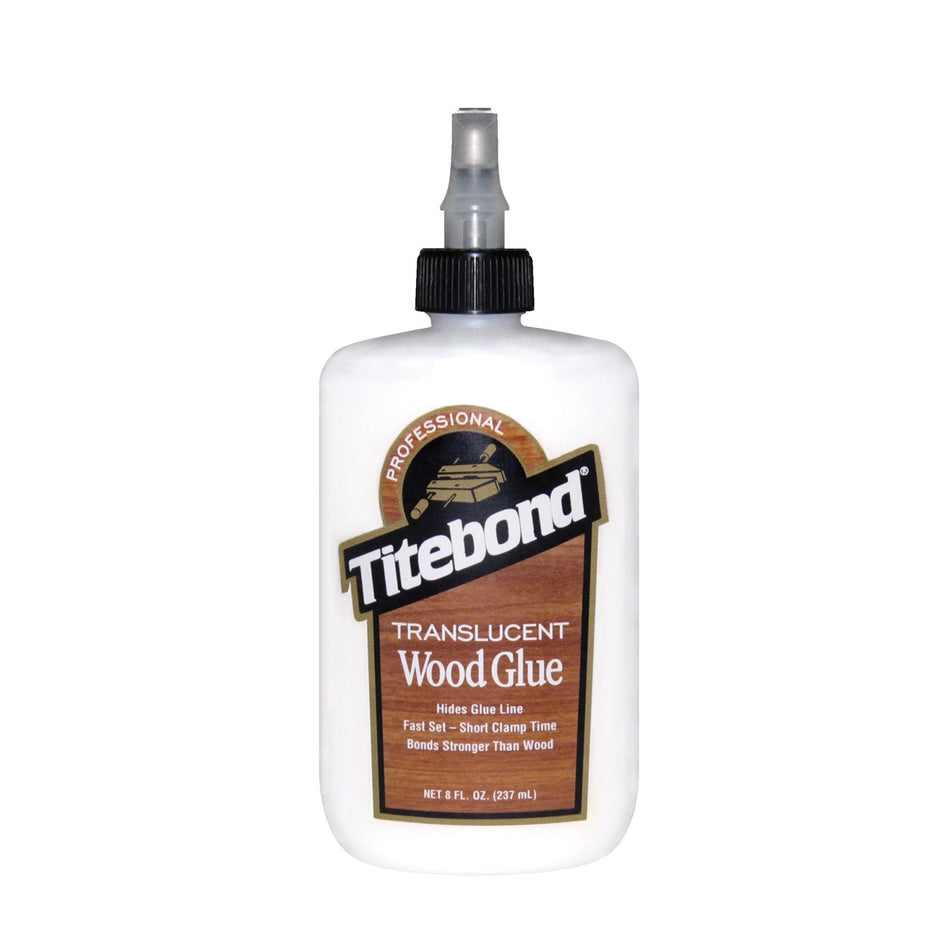
PVA wood glue (Titebond, Gorilla Wood Glue and similar brands) is the default adhesive for structural wood-to-wood joints. It is strong (a properly made PVA joint is stronger than the wood itself), inexpensive, non-toxic, and cleans up with water while wet. PVA requires clamping pressure and a close-fitting joint — it is a poor gap-filler.
Best for: All structural wood joints — mortise and tenon, dovetails, box joints, edge gluing, face gluing, veneering. Guitar neck joints, fretboard gluing, brace gluing in acoustic guitars.
Not for: End-grain to end-grain joints (the end grain absorbs the glue before it sets), oily or resinous woods without surface preparation (wipe with acetone first), any joint that needs to be disassembled later (PVA is permanent), non-porous materials like metal, plastic or glass.
Types: Titebond Original is the standard interior-grade PVA. Titebond II adds water resistance for occasional moisture exposure. Titebond III is fully waterproof and suitable for exterior use and items that will be washed. See our guide to choosing between Titebond Original, II and III.
CA (cyanoacrylate) — superglue
CA adhesive is the maker's utility knife — it does a bit of everything. Available in thin (water-like, wicks into tight joints), medium (general purpose, some gap-filling) and thick (gel consistency, good gap-filling) viscosities, CA bonds in seconds and works on a wider range of materials than almost any other adhesive. GluBoost produce a professional-grade CA range designed specifically for instrument making and fine woodwork.
Best for: Inlay work, binding and purfling, fret gluing, pen turning (as a finish), quick repairs, bonding small parts, filling small gaps and cracks (thick CA mixed with sanding dust), temporary workholding (thin CA between two pieces, snapped apart when done).
Not for: Structural wood joints under load (CA is brittle under sustained stress), flexible materials (the bond is rigid and will crack), any joint that needs repositioning (CA sets in seconds with no second chances), very large surface areas (it sets too fast to spread evenly).
Tips: CA works best on clean, close-fitting surfaces. Accelerator spray gives an instant cure but can cause the bond to bloom (turn white) — use sparingly or not at all on visible joints. Always store CA upright with the cap on, in a cool place. Refrigerating extends shelf life significantly.
Epoxy
Two-part epoxy is the heavy-duty problem solver. It bonds to virtually any material (wood, metal, plastic, glass, stone, ceramic), fills gaps, and cures to a very strong, rigid bond. Epoxy does not require clamping pressure — it is one of the few adhesives that actually performs better in a thicker glue line, making it ideal for ill-fitting joints and irregular surfaces.
Best for: Bonding dissimilar materials (wood to metal, metal to glass etc.), gap-filling, inlay cavities, potting and casting, structural repairs where the joint cannot be clamped, bedding guitar nuts and bridges, filling voids in wood (mixed with pigment or wood dust).
Not for: Situations where you need a fast cure (standard epoxy takes 5-30 minutes to set and 24 hours to full strength), joints that may need to be disassembled (epoxy is extremely difficult to reverse), applications where you need a thin, invisible glue line (epoxy has a visible yellow or clear line).
Types: 5-minute epoxy is convenient but significantly weaker than slow-set formulas. For structural work, use a 30-minute or longer set time. Marine epoxy is the strongest and most water-resistant. Tinted or filled epoxies (mixed with pigment, metal powder, or wood dust) are used for decorative fills and invisible repairs.
Polyurethane glue
Polyurethane glue (Gorilla Glue is the best-known brand) is waterproof, bonds to a wide range of materials, and foams as it cures to fill gaps. It is activated by moisture — you dampen one surface before applying the glue to the other. The foaming expansion means clamping is essential to prevent the joint being pushed apart.
Best for: Exterior and marine applications, oily and resinous woods that resist PVA (teak, ipe, cocobolo), mixed-material joints (wood to stone, wood to rigid foam), any joint that will be exposed to sustained moisture.
Not for: Precision joints where squeeze-out is a problem (the foam is messy and difficult to clean up once cured), joints requiring fast setting (polyurethane takes several hours to cure), any application where the foaming expansion would be a problem.
Contact cement
Contact cement is applied to both surfaces, allowed to dry until tacky, then pressed together for an instant, permanent bond. It does not require clamping and works on large surface areas, making it the standard adhesive for applying laminates, veneers (when using the hammer veneering method) and leather.
Best for: Applying plastic laminate to countertops, hammer veneering, bonding thin sheet materials to flat substrates, applying leather or fabric to wood, drum wrap application.
Not for: Any joint that needs repositioning (contact cement bonds on contact — once the surfaces meet, there is no adjustment), structural joints under load, any application requiring a thick glue line.
Types: Solvent-based contact cement (stronger, more heat-resistant, unpleasant fumes — use with ventilation) and water-based contact cement (lower fumes, easier cleanup, slightly weaker bond).
Solvent cement
Solvent cement works by partially dissolving the surfaces being joined, creating a chemical weld. It is specific to the material being bonded — acetone-based cement for celluloid, MEK or dichloromethane-based cement for acrylic, and dedicated plastic cements for ABS and polystyrene. The resulting bond is as strong as the parent material.
Best for: Acrylic fabrication and polishing (acrylic-to-acrylic joints), guitar binding (celluloid or ABS to wood), plastic model assembly, any joint between pieces of the same thermoplastic material.
Not for: Bonding dissimilar materials (solvent cement only works between pieces of the same or very similar plastics), gap-filling (the joint must be close-fitting for the surfaces to weld), any material that is not a thermoplastic (wood, metal, glass, thermoset plastics like fibreglass are all unaffected by solvent cement).
Quick reference
Wood to wood (structural): PVA wood glue. This is the strongest, most reliable and most forgiving adhesive for permanent wood joints.
Wood to wood (quick repair): Medium CA. Sets in seconds, strong enough for non-structural repairs, easy to sand and finish over.
Wood to metal: Epoxy. The only common adhesive that bonds well to both porous and non-porous surfaces simultaneously.
Acrylic to acrylic: Solvent cement. Creates an invisible chemical weld that is as strong as the acrylic itself.
Oily wood joints: Polyurethane glue or epoxy. Both bond well to oily surfaces where PVA may fail.
Veneer and laminate: PVA (vacuum or press veneering), contact cement (hammer veneering or laminate), or hide glue (traditional and reversible).
Inlay work: Tinted epoxy (for gap-filling cavities) or thin CA (for tight-fitting inlays).