
The blank is the soul of a turned pen — it determines the look, the weight, the feel in the hand, and how the finished piece catches the light. With hundreds of options available, choosing can be overwhelming. This guide compares the main material families so you can narrow down what suits your style and your project.
Acrylic
Acrylic pen blanks offer the widest range of colours, patterns and effects of any blank material. From bold solid colours to subtle translucent swirls, from deep pearlescent sheens to vivid multi-colour blends — if you can imagine a colour combination, there is probably an acrylic blank for it. Acrylic is also the most consistent material to turn: it has no grain direction, no natural defects, and machines predictably every time.
Turning acrylic requires a sharp scraper or a very light touch with a skew. It shatters rather than cuts if you are too aggressive, so take light passes. Acrylic generates heat quickly — keep your tools sharp and do not let friction build up, or the material will melt and gum up on the tool edge. Sanding and polishing acrylic through micro-mesh grits (up to 12,000) produces a glass-like shine with no additional finish required.
Pros: Huge colour range, consistent turning, waterproof, no finish needed, polishes to a high gloss.
Cons: Can shatter if turning technique is poor, lighter weight than some alternatives, can feel cold in the hand compared to wood.
Kirinite
Kirinite is a premium acrylic with exceptional depth and chatoyance — the three-dimensional shimmer effect that shifts as you turn the pen in the light. Kirinite blanks have a richness and visual complexity that standard acrylics rarely match. The material turns and polishes almost identically to standard acrylic, with the same techniques and same glass-like finish.
Kirinite is also available in blocks for knife scales, bottle stoppers and other turned projects, making it versatile beyond pen turning.
Pros: Outstanding visual depth and chatoyance, premium look and feel, same workability as acrylic.
Cons: Higher price point than standard acrylic, smaller colour range (though still extensive).
Wood
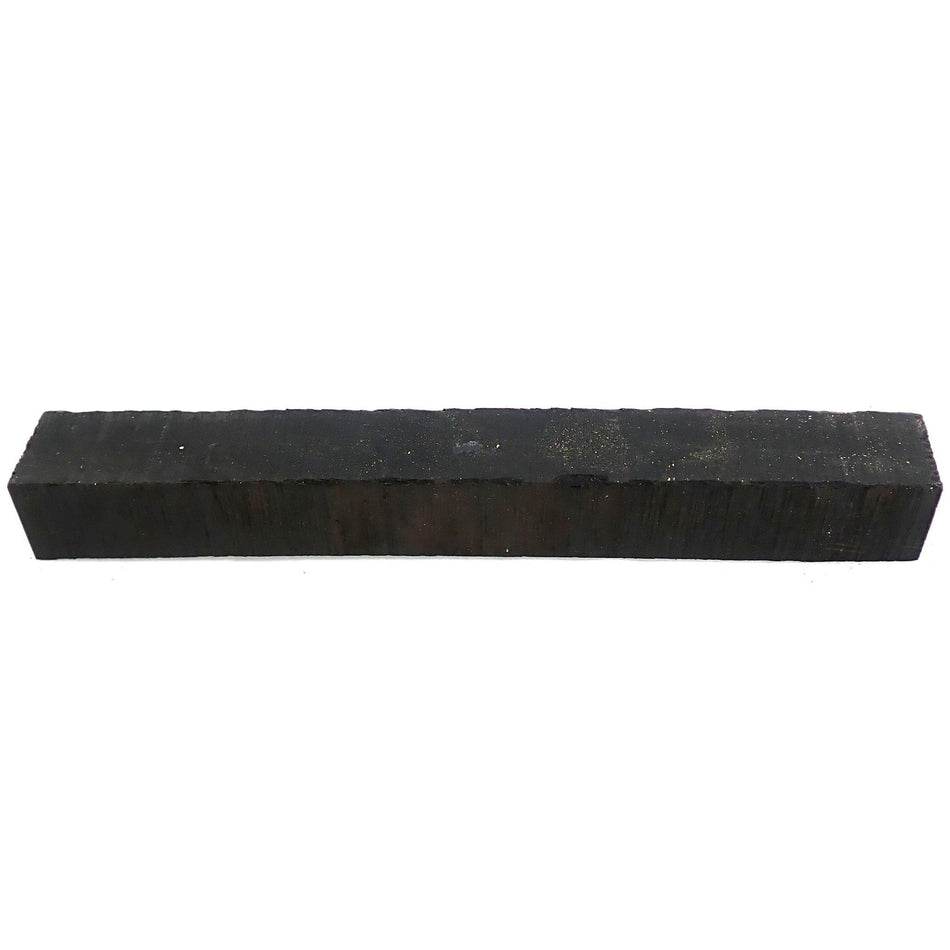
Wooden pen blanks offer the warmth, natural beauty and tactile pleasure that only real timber can provide. Every blank is unique — the grain, figure and colour variations make each pen one of a kind. Popular species include olive, cocobolo, spalted maple, padauk, purpleheart, snakewood, bocote and stabilised burl.
Turning wood requires attention to grain direction — cutting with the grain gives clean results while cutting against it causes tear-out. Sharp tools, moderate speed and light cuts are the keys to a clean surface. Wood blanks need a finish — CA (superglue) finish is the most popular for pens because it is waterproof, hard, and can be polished to a high gloss that shows off the wood grain beautifully. Oil and friction polish are alternatives for a more natural look and feel.
Stabilised wood (impregnated with resin under vacuum) is significantly easier to turn than raw wood — it does not tear, splinter or move with humidity changes, and it polishes like acrylic while retaining the natural wood appearance.
Pros: Natural beauty, warmth, every piece unique, traditional appeal, tactile pleasure.
Cons: Requires a finish, grain direction affects turning, can be affected by humidity (unless stabilised), more variable quality.
Hybrid (resin and wood)
Hybrid blanks combine wood with coloured resin — typically a piece of burl, bark-edge offcut or spalted timber with the voids, cracks and bark inclusions filled with tinted or clear resin. The contrast between natural wood and vivid resin creates some of the most visually striking pens possible.
Hybrids turn well — the resin-filled areas machine like acrylic while the wood sections require normal wood-turning technique. The transition between materials needs a sharp tool and light touch to avoid chipping. Finish with CA for a uniform gloss across both materials.
Pros: Dramatically beautiful, unique pieces, combines the best of wood and resin.
Cons: Highest price point, transition areas need careful turning, quality varies between suppliers.
Polyester resin
Polyester turning blanks are cast from polyester resin, often with embedded materials — aluminium honeycomb, carbon fibre mesh, dyed fabric, or metal shavings. The results can be striking and unusual. Polyester turns and polishes similarly to acrylic, though it can have a slightly different feel under the tool.
Pros: Unusual and unique effects not possible with other materials, good weight and balance.
Cons: More limited colour range than acrylic, can have an unpleasant smell when turning, some polyester blanks are brittle.